





ego (lite) ist nur ein Browser, ego ist Ihr persönlicher Agent für alle Geräte.
Zur Warteliste anmelden
ego lite vs Browserbase

Die beste Browserbase-Alternative

Browserbase is a cloud browser platform: your code spins up remote sessions over REST, drives them over CDP, and pays by the browser minute.

ego lite is a Browserbase alternative for your own agent work: real Chromium on your Mac, already signed into your accounts, controlled by your coding agent via /ego-browser. No session to create, no meter, finishing whole tasks 3 to 4x faster than Browserbase.

Vertraut von Entwicklern von
GoogleAmazonShopifyTikTokHarvardStanfordUSCUCLA

Warum ego lite besser ist als Browserbase

A Browserbase session is a fresh remote browser on someone else's servers. ego lite starts from your imported Chrome profile on your machine. Run /ego-browser in Claude Code, Codex, or Cursor.

3- bis 4-mal schneller bei echten Aufgaben

Before your agent touches a page, you wait for a cloud session to spin up, and the meter starts immediately. Browser time bills by the minute with a one-minute minimum, so a twenty-second check still costs a full minute.

Run /ego-browser and your coding agent controls ego lite on your machine. Every page arrives as a Snapshot: a compressed accessibility tree with stable @N refs it can act on instantly, finishing whole tasks 3 to 4x faster than Browserbase.

Time to finish a task, shorter is better
81.8 sego lite
282.9 sagent browser
Data source - Task: scrape the main posts from the X account from the last 7 days
Paralleles Multitasking, schnellere Ausführung

How many Browserbase sessions you can run at once depends on your plan: 3 on the free tier, 25 on Developer, 100 on Startup. Go past that and work waits in a queue. To watch a run, you open Live View in a dashboard tab.

In ego lite there's no cap on how many Spaces you open inside the same browser: each one runs its own task at the same time, controlled by a coding agent via /ego-browser on its own imported Chrome profile. None of them ever steals the tab you're using, and you can watch or take over any Space anytime.

Kein Hin und Her mehr Geringere Token-Kosten

Drive Browserbase with Stagehand and a simple checkout flow turns into a chain of model calls, each one waiting on a page read over the network before the next click.

Run /ego-browser and your coding agent batches several actions in a few lines of JavaScript per turn to control ego lite. Stacked with Snapshot input, the same task completes on far fewer tokens overall.

Claude Code · ego lite
>/ego-browser Add the first product to the cart, then check checkout loads
Bash(
ego-browser nodejs <<'EOF' await openOrReuseTab('localhost:3000') await click('.product-card') await click('.add-to-cart') await click('a[href="/checkout"]') cliLog('checkout loaded') EOF
)
Output:
[t=4480ms] checkout loaded
Done. Both steps work.
─── 1 tool call · 1.1k tokens ───
Stagehand · env: "BROWSERBASE"
>$ npx tsx run_task.ts const stagehand = new Stagehand({ env: "BROWSERBASE" }) await stagehand.init()
await page.goto("http://localhost:3000")
// page = stagehand.context.pages()[0]
navigated: http://localhost:3000
live view: https://www.browserbase.com/sessions/4f1c…
1.6k tokens sent so far
await stagehand.act("click the first product card")
// LLM call #1 · model: gpt-5.6-sol · cacheStatus: "MISS"
→ { success: true, message: "Action completed successfully",
actions: [{ selector: "/html/body/div[2]/main/div[1]/a",
method: "click", arguments: [] }] }
3.8k tokens sent so far
await stagehand.act("click add to cart")
// LLM call #2 · model: gpt-5.6-sol · cacheStatus: "MISS"
→ { success: true, message: "Action completed successfully",
actions: [{ selector: "/html/body/div[2]/main/button[1]",
method: "click", arguments: [] }] }
5.9k tokens sent so far
await stagehand.observe("find the checkout link")
// LLM call #3 · model: gpt-5.6-sol
→ [{ selector: "/html/body/nav/a[href='/checkout']",
description: "Checkout link", method: "click", arguments: [] }]
8.0k tokens sent so far
await stagehand.act(action)
// no LLM: Action from observe()
→ { success: true, message: "Action completed successfully",
actions: [{ method: "click", arguments: [] }] }
navigated: /checkout
9.1k tokens sent so far
await stagehand.extract("is the payment form present?", z.object({ present: z.boolean() }))
// LLM call #4 · model: gpt-5.6-sol
→ { present: true }
11.4k tokens sent so far
await stagehand.extract("list the payment fields", z.object({ fields: z.array(z.string()) }))
// LLM call #5 · model: gpt-5.6-sol
→ { fields: ["card", "expiry", "cvc", "zip"] }
13.6k tokens sent so far
─── 7 model calls · 13.6k tokens ───
Dieselbe Aufgabe, dasselbe Modell. Links: ein gebündelter JavaScript-Aufruf in ego lite, 1.1k Tokens insgesamt. Rechts: Stagehand steuert eine Remote-Browserbase-Session, 7 Calls, Tokens steigen auf 13.6k.

Dasselbe Chrome, nativ für Agenten

Browserbase sessions start with a fresh profile unless you turn on persistence, and Browserbase's own docs say two-step verification and magic links usually need a human in the loop.

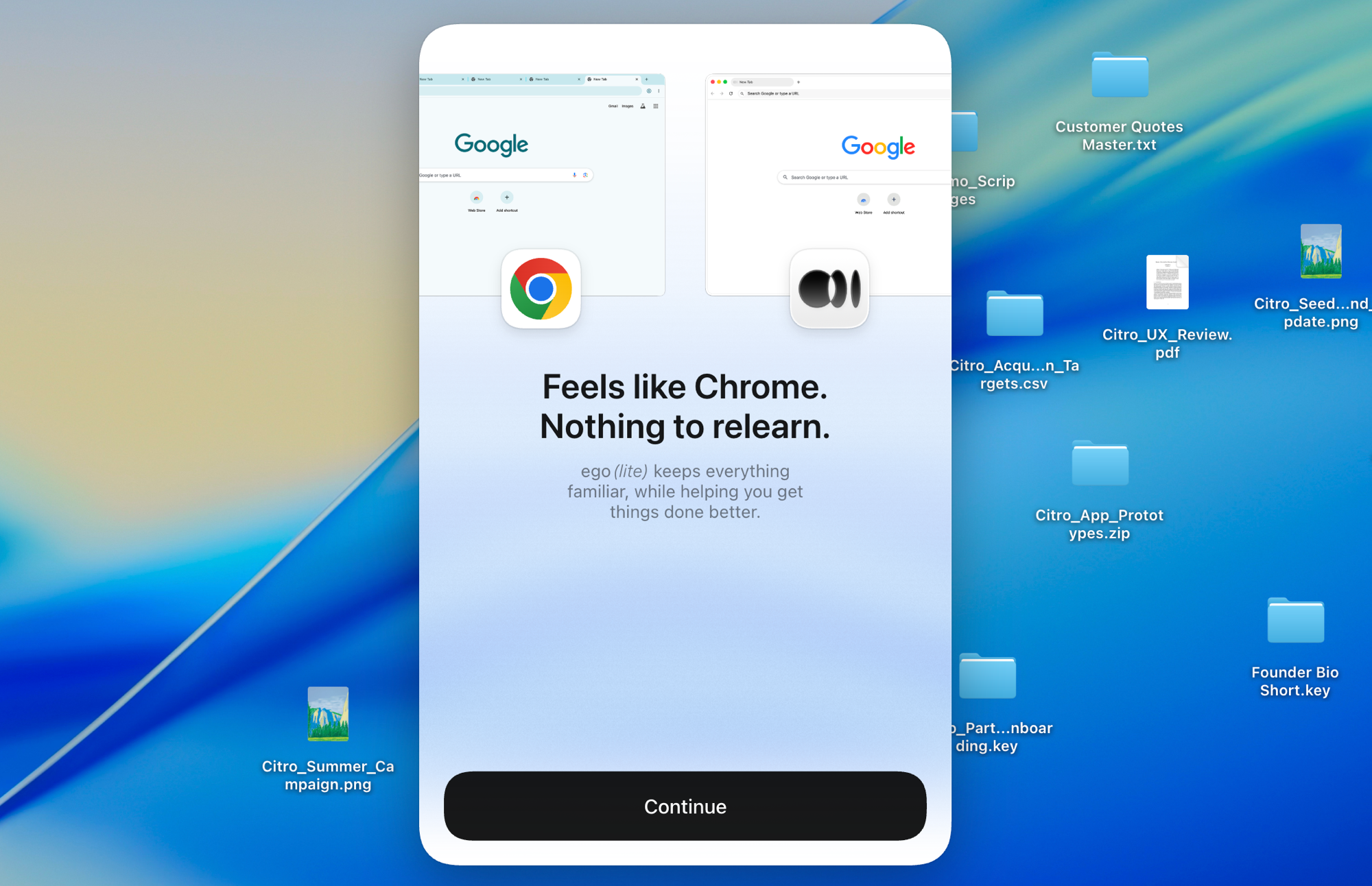
Built on Chromium, ego lite imports your entire Chrome setup in one click. When your coding agent runs /ego-browser, it controls ego lite with your real sessions already in place, so it doesn't stall on SSO, 2FA, or captchas on accounts you already have.

ego lite Chrome-Profilimport: Einrichtung mit einem Klick, inklusive aller Logins

ego lite vs Browserbase

Feature-Vergleich zwischen ego lite und Browserbase.
Funktionego liteBrowserbase
Wo der Browser läuftLokal auf deinem Mac, als dein täglicher BrowserBrowserbase cloud only; no self-hosted option
Eingeloggte Websites (SSO, 2FA)One-click Chrome profile import; coding agent controls ego lite with real sessions via /ego-browserFresh user data by default; docs say 2FA and magic links need a human in the loop
Wie der Agent sich verbindetFühre /ego-browser in Claude Code, Codex oder Cursor aus. Kein SDK, kein API-KeySession über REST erstellen, dann über CDP mit Stagehand, Playwright, Puppeteer oder Selenium anbinden
Token-Kosten pro AufgabeLower: Snapshot input plus batched JavaScript, measured per taskStagehand: a model call per act/observe/extract; plain Playwright/Puppeteer/Selenium scripts: none
PreisKostenlos, kein Abo, kein AccountFree tier, then $20/mo Developer / $99/mo Startup / custom Scale, plus overage
Was gemessen wirdNichts. Der Browser ist schon auf deinem RechnerBrowser minutes and proxy MB, with one-minute and one-MB minima per session
Parallele AufgabenUnlimited Spaces in one browser, bounded by your machinePlan caps: 3 free, 25 Developer, 100 Startup, 250+ Scale
Wessen Reputation der Traffic trägtYour network and your logged-in browserShared cloud IP ranges
Wohin deine Daten gehenStays on your machinePages transit Browserbase; recording is on by default unless you opt out
Wiederverwendbare Skills (bald verfügbar)Verdichtet erfolgreiche Durchläufe zu wiederverwendbaren Skills; bis zu 5-mal schneller bei komplexen Aufgaben, wenn der Agent sie wiederholt (limitierte Beta)Keine integrierte Entsprechung
Produktions-Browserflotten und ComplianceNein. Der Rechner und die Konten eines EntwicklersYes: SOC 2 Type II, HIPAA BAA, DPA, SAML SSO, four data regions
Zuletzt aktualisiert 30. Juli 2026

Der nahtlose Wechsel

Keep Browserbase for your product's cloud fleet. Move your own logged-in browser work to ego lite in a few minutes.

  1. ego (lite) herunterladen

    Lade ego lite herunter und importiere dein Chrome-Profil mit einem Klick. Logins, Cookies und Erweiterungen sind direkt mit dabei.

  2. Starte deine erste Aufgabe mit /ego-browser

    In deinen Agenten einfügen

    /ego-browser Öffne ego.app und trage dich auf die Warteliste ein

    Paste one sentence into Claude Code, Codex, or Cursor and hit enter. No session to create, no API key, no SDK.

  3. Sieh es dir bei der Arbeit an
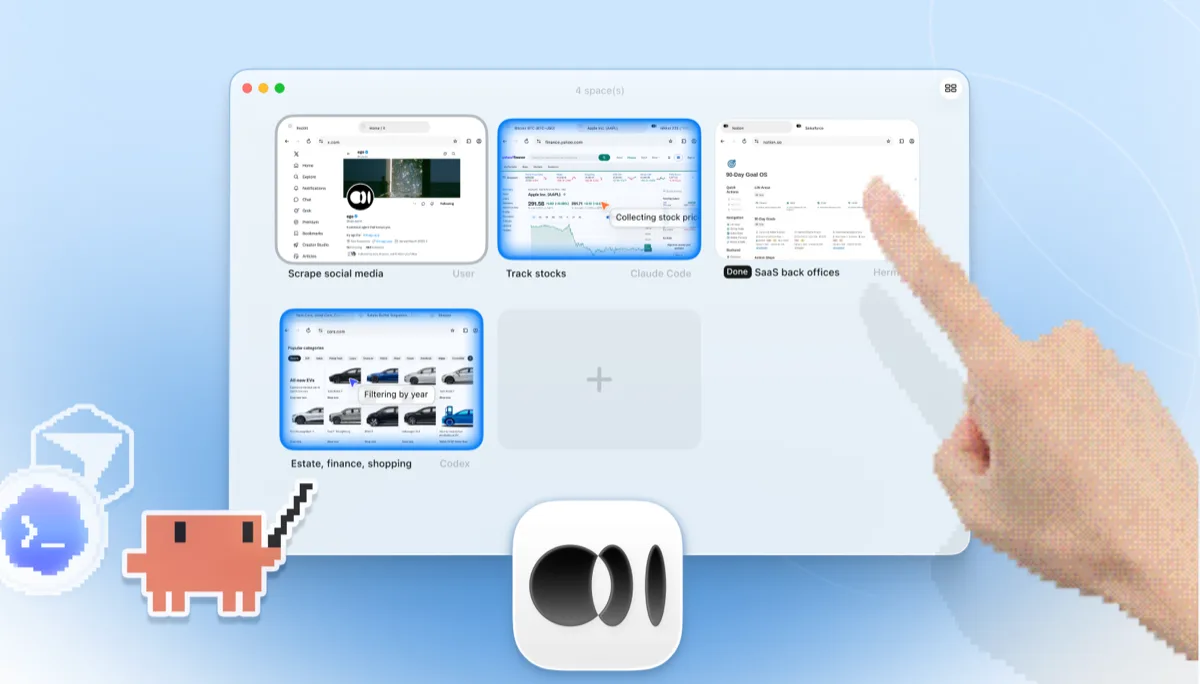
    ego lite Spaces-Übersicht mit vier Browser-Aufgaben, die nebeneinander laufen: Claude Code verfolgt die Apple-Aktie auf Yahoo Finance, Codex filtert Autos nach Baujahr auf cars.com, Hermes erledigt eine SaaS-Back-Office-Aufgabe, ein Nutzer scrapt X, und eine Hand tippt auf +, um einen weiteren Space zu öffnen

    The task runs in its own Space, so your tabs stay untouched. Watch live or take over anytime. Results land back in your agent's CLI.

Keep Browserbase for high concurrency, unattended runs, and anonymous targets that need proxies and captcha solving.

Wann sich welches Tool eignet

Wähle ego (lite), wenn

  • Your tasks touch logged-in sites: dashboards, admin panels, anything behind SSO or 2FA.
  • You want a free local loop with no session create step and no browser minutes to bill.
  • Pages and credentials should stay on your machine, not transit a cloud provider.
  • You want parallel Spaces you can watch or take over from Claude Code, Codex, or Cursor.

Wähle Browserbase, wenn

  • You need real cloud concurrency (100+ browsers). ego lite is one machine.
  • Work must keep running when your laptop is closed.
  • You're hitting anonymous targets at volume and want managed proxies, stealth, and captcha solving.
  • You need SOC 2, HIPAA, SAML, and session recording because your product runs browsers for customers.

Gib deinem Agenten einen echten Browser

Kostenlos, läuft auf deinem Mac und importiert dein Chrome-Profil mit einem Klick. Funktioniert mit Claude Code, Codex, Cursor und jedem CLI-Agenten, der Code schreibt.

Noch am Abwägen? Sieh, wie Browserbase sich mit den anderen Tools im selben Raum vergleicht.

FAQ

Browserbase is a cloud browser platform with docs and SDKs on GitHub. You create sessions over REST, drive them over CDP with Playwright, Puppeteer, Selenium, or Stagehand, and pay for browser time plus proxy bandwidth. It handles the ops layer most teams would rather not build: proxies, stealth, captcha solving, session recording, and compliance. For products that need browsers at volume for their own users, it is the reference choice among browserbase competitors. It is cloud-only; there is no self-hosted option.

For your own logged-in browser work, yes: free, local, already signed in, driven via /ego-browser. For production cloud fleets that need 100+ concurrent browsers, managed proxies, captcha solving, and compliance paperwork, Browserbase is still the right category.

Browserbase bills browser minutes and proxy bandwidth: a free tier, then Developer at $20/mo, Startup at $99/mo, and custom Scale plans, plus overage. ego lite is free. The browser is already on your machine, so there is nothing to meter.

Not by default. Sessions start with fresh user data unless you persist a context and sign in by hand through Live View. Browserbase's docs say two-step verification and magic links usually need a human in the loop. ego lite imports your Chrome profile once locally, and every task starts signed in.

Browserbase publishes product docs and open SDKs on GitHub, including Stagehand. That repo is the usual landing point for browserbase github searches. ego lite is separate: a Chromium browser on your Mac, controlled through the MIT ego-browser shell, not a cloud session API.

They sit at different layers. Browser Use is a Python agent framework that decides what to do. Browserbase is the cloud browser infrastructure those agents often run on. ego lite is neither: run /ego-browser and your coding agent controls ego lite locally, with no session API and no per-minute billing.

operator.browserbase is Browserbase's operator-style surface for driving cloud browser sessions from an agent. ego lite is not a hosted operator. It is local Chromium your coding agent controls with /ego-browser, already signed into your accounts.

Among browserbase competitors, the usual names are cloud browser platforms like Browserless, Steel, and hosted Playwright or Puppeteer fleets, plus agent stacks that bundle their own remote browsers. ego lite is a different category: a Chromium browser on your Mac for your own agent work, not a fleet you operate for customers.

Yes, but not directly from /ego-browser. You create a Browserbase session over REST, attach over CDP, and drive it with Stagehand, Playwright, Puppeteer, or Selenium from a script your agent runs. That path fits cloud automation. For logged-in work inside your own accounts, ego lite is simpler: run /ego-browser in Claude Code, Codex, or Cursor with no session create step.

Shared cloud IP ranges carry shared reputation, so some sites treat traffic as automated even when you mean well. Proxies and stealth help on anonymous targets. With ego lite, traffic comes from your own network and logged-in browser.

No. Browserbase's FAQ says there is no self-hosted option. ego lite runs entirely on your Mac. Free on macOS 12+, no account required.