





ego (lite) es solo un navegador, ego es su agente personal en todos sus dispositivos.
Únanse a la lista de espera
ego lite vs Playwright MCP

La mejor alternativa a Playwright MCP

Playwright MCP exposes browser controls as model-facing tools. ego (lite) gives the agent a browser-native workspace.

ego (lite) completed 93.5% of tasks perfectly in our published benchmark of 31 live-site browser automation jobs, the highest perfect-completion rate measured.

Con la confianza de desarrolladores de
GoogleAmazonShopifyTikTokHarvardStanfordUSCUCLA

Browser automation benchmark: ego lite vs Playwright MCP

This is agent-driven browser automation on live websites, not a snapshot-and-click loop on a fixture page. Both tools ran the same 31 multi-step tasks: several pages, several decisions, many behind a login. That is the work that turns one MCP tool call per action into a long, expensive chain. Both ran the identical set, so the bars below compare the same jobs.

agent: pimodel: ChatGPT 5.6 Solthinking: max31 tasks

Task completion rate

How often the agent finished the job. Stuck at login, skipped a step, or returned the wrong result: that task is a fail. Higher is better.

ego lite93.5%31 tasks benchmarked
playwright-cli71.0%31 tasks benchmarked

Cost per completed task

What one finished job costs in model spend. Failures still get billed, so they push this number up. Lower is better.

ego lite$1.75
playwright-cli$4.82

Model turns per task

How many times the model had to look at the page and choose the next action. Extra looks mean extra tokens, extra waiting, and extra places to stall. Lower is better.

ego lite30.3
playwright-cli42.8

Average task time

How long a job took from start to finish, on average, including time spent waiting on the model. Lower is better.

ego lite6m 38s
playwright-cli10m 48s

We ran the same 31 browser automation tasks with the same model and judge. A failed task still counts against it.

We measured Playwright through playwright-cli, not the MCP server. MCP uses the same engine and adds one extra round trip per action.

Check the numbers, or rerun the tasks yourselfThe 31 tasks, grading checklists, and raw results are open source. If a number looks off, open the repo.ego-browser-benchmark-framework

Por qué ego lite es mejor que Playwright MCP

The difference is the execution surface. MCP makes the model coordinate a tool call for each step; ego (lite) lets the coding agent operate a full browser, compose actions, and return the result. Use the same setup for search, research, extraction, forms, testing, or any web workflow that needs a real session.

93.5% of tasks done perfectly. No other tool tops 84%.

Playwright MCP re-reads the page through a tool call at every step, the browser sits idle while the model thinks, and every extra round trip is another chance for a long task to fall apart. On those 31 jobs, agent-driven Playwright ends 29% of tasks short of a perfect score.

In ego lite, every page reaches your agent as a Snapshot: a compressed accessibility tree with stable @N refs it can act on instantly, several actions per JavaScript turn. The agent spends its time doing the task, not parsing pages: 93.5% of the same 31 tasks end perfect, at the fastest average task time of the five tools measured.

Time to finish a task, shorter is better
398 sego (lite)
648 splaywright-cli
Data source - Task: finish an average live-site job
Multitarea en paralelo, ejecución más rápida

Un servidor de Playwright MCP controla una sola sesión de navegador, así que el trabajo en paralelo implica manejar varias configuraciones de servidor a la vez.

En ego lite no hay límite en la cantidad de Spaces que puedes abrir dentro del mismo navegador: cada uno ejecuta su propia tarea al mismo tiempo, controlado por el mismo agente o por uno distinto, sobre su propio perfil de Chrome importado. Ninguno de ellos te quita nunca la pestaña que estás usando, y puedes observar o tomar el control de cualquier Space en cualquier momento.

Se acabó el ida y vuelta Menos costo en tokens

Cada acción de Playwright MCP es una ida y vuelta de herramienta independiente que vuelve a enviar el contexto a través del modelo.

Tu agente en ego lite agrupa varias acciones en pocas líneas de JavaScript por turno. Sumado a la entrada por Snapshot, la misma tarea se completa con muchos menos tokens en total.

Claude Code · ego lite
>/ego-browser Add the first product to the cart, then check checkout loads
Bash(
ego-browser nodejs <<'EOF' await openOrReuseTab('localhost:3000') await click('.product-card') await click('.add-to-cart') await click('a[href="/checkout"]') cliLog('checkout loaded') EOF
)
Output:
[t=4480ms] checkout loaded
Done. Both steps work.
─── 1 tool call · 1.1k tokens ───
Claude Code · Playwright MCP
>Add the first product to the cart, then check checkout loads
playwright - browser_navigate (MCP)(url: "localhost:3000")
Page Snapshot
… +224 lines (ctrl+o to expand)
1.6k tokens sent so far
Storefront rendered. Opening the first product.
playwright - browser_click (MCP)(ref: "e18")
Page Snapshot
… +198 lines (ctrl+o to expand)
3.1k tokens sent so far
Product page is up. Now the Add to cart button.
playwright - browser_click (MCP)(ref: "e42")
Page Snapshot
… +205 lines (ctrl+o to expand)
4.9k tokens sent so far
Added. Heading to checkout.
playwright - browser_navigate (MCP)(url: "localhost:3000/checkout")
Page Snapshot
… +231 lines (ctrl+o to expand)
6.8k tokens sent so far
Refs are stale after the navigation. Taking a fresh snapshot.
playwright - browser_snapshot (MCP)
Page Snapshot
… +238 lines (ctrl+o to expand)
9.2k tokens sent so far
Now waiting for the payment form to render.
playwright - browser_wait_for (MCP)(text: "Payment")
Page Snapshot
… +229 lines (ctrl+o to expand)
11.2k tokens sent so far
Confirming the form is actually there.
playwright - browser_evaluate (MCP)(expression: "!!document.querySelector('form#payment')")
Page Snapshot
… +25 lines (ctrl+o to expand)
13.6k tokens sent so far
─── 7 tool calls · 13.6k tokens ───
La misma tarea, el mismo modelo. Izquierda: una sola llamada de JavaScript agrupada en ego lite, 1.1k tokens en total. Derecha: Playwright MCP, 7 idas y vueltas, los tokens llegan a 13.6k.

El mismo Chrome, nativo para agentes

El servidor de Playwright MCP lanza un navegador en blanco que se queda atascado en SSO, 2FA y captchas.

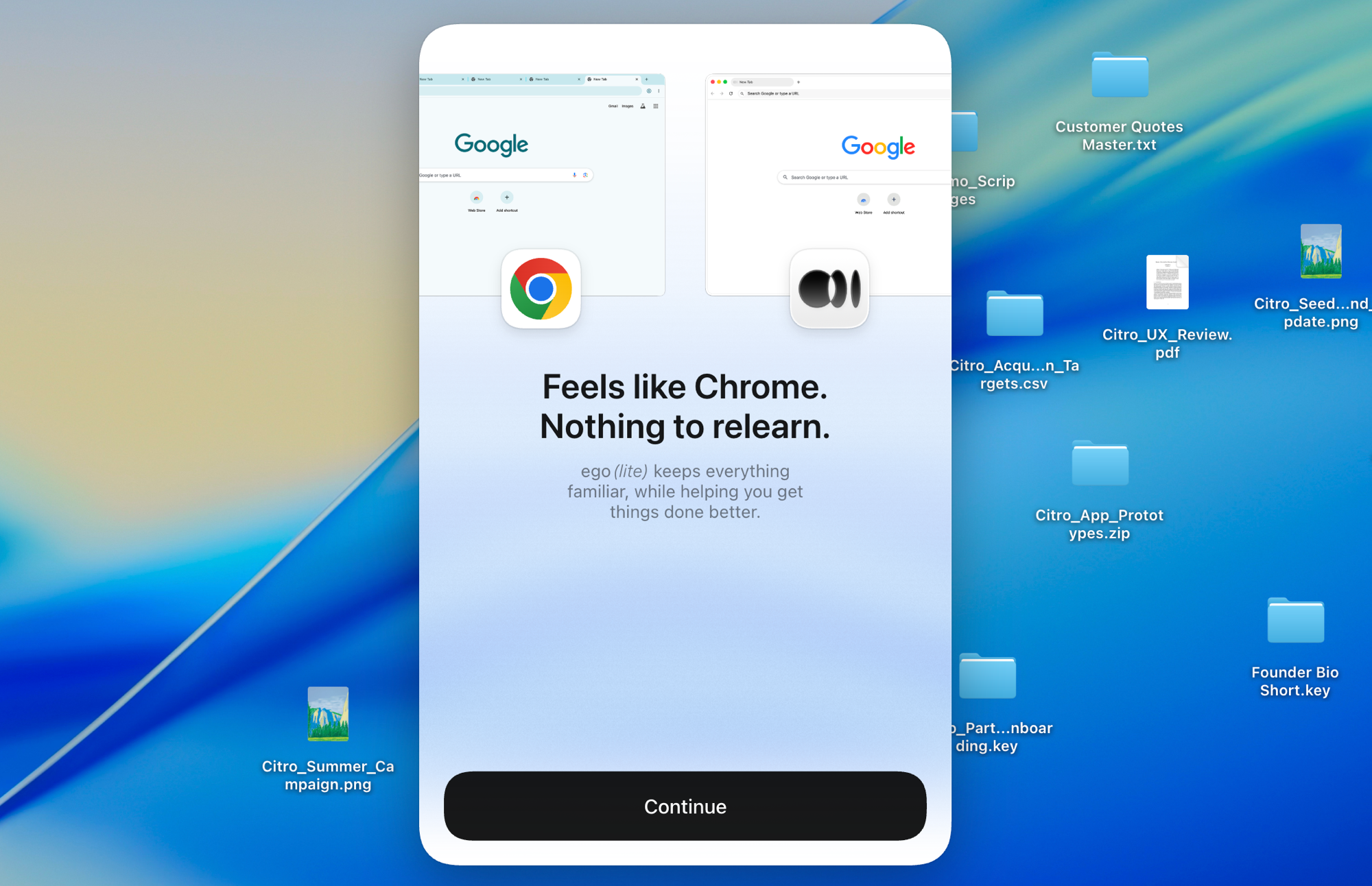
Built on Chromium, ego lite imports your entire Chrome setup in one click. It works like Chrome, so an agent can start from an authorized session; it does not bypass CAPTCHAs, 2FA, SSO redirects, or any site's access controls. When a challenge appears, pause and let a person complete it or switch to an approved source.

Importación del perfil de Chrome en ego lite: configuración con un clic y todas tus sesiones

ego lite vs Playwright MCP

Comparación de funciones entre ego lite y Playwright MCP.
Funciónego litePlaywright MCP
Cómo actúa el agente sobre una páginaEscribe JavaScript que agrupa varias acciones por turnoUna llamada de herramienta MCP por acción, con una ida y vuelta a través del modelo cada vez
Costo en tokens por tareaMenor: entrada por Snapshot más acciones agrupadas, medido por tareaMás alto: cada paso vuelve a enviar el contexto a través del ciclo MCP
Browser automation on live sites (31-task suite)93.5% perfect, $1.75 per completed task, 30.3 round trips71% perfect, $4.82 per completed task, 42.8 round trips (measured via playwright-cli)
Reutiliza tus inicios de sesión reales de ChromeSí, importación del perfil de Chrome con un clic (cookies, sesiones, extensiones)No. Lanza un navegador nuevo; la autenticación requiere configuración manual por sitio
ConfiguraciónInstalá la app y ejecutá /ego-browser en tu agenteAgrega Playwright MCP a Claude Code o Codex en la configuración MCP de cada agente, y luego gestiona el ciclo de vida del servidor
Aislamiento de tareas en paraleloSí, los Spaces ejecutan tareas en paralelo dentro de un mismo navegadorUna sesión por servidor; el paralelismo implica varias instancias de servidor
También funciona como tu navegador de uso diarioSí. Tú navegas en tu Space, los agentes trabajan en el suyoNo, es una instancia de navegador solo para automatización
Habilidades reutilizables (próximamente)Distills successful runs into reusable skills for repeat tasks (limited beta)Sin equivalente incorporado
PrecioGratis, sin suscripciónGratis y de código abierto
Última actualización 30 ago 2026

Hacé de esto una transición sin fricciones

¿Ya tienes Playwright MCP conectado a Claude Code o Codex? Cambiar toma solo unos minutos y no tienes que eliminar nada.

  1. Descargar ego (lite)

    Descarga ego lite e importa tu perfil de Chrome con un clic. Los inicios de sesión, las cookies y las extensiones se importan junto con él.

  2. Ejecuta tu primera tarea con /ego-browser

    Pega esto en tu agente

    /ego-browser Abre ego.app y revisa la página en busca de errores en la consola

    Pega una sola frase en Claude Code, Codex o Cursor y presiona enter. Sin configurar servidores MCP, sin editar JSON, sin scripts de prueba.

  3. Míralo en acción
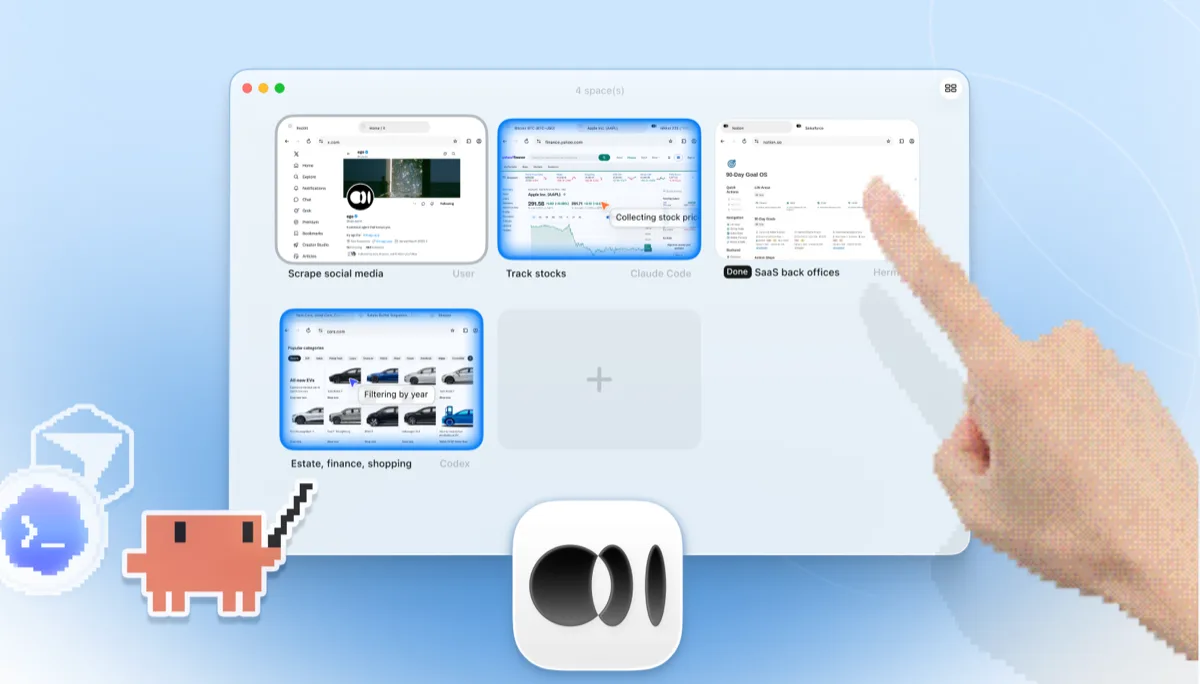
    Vista general de Spaces en ego lite con cuatro tareas de navegador corriendo en paralelo: Claude Code siguiendo la acción de Apple en Yahoo Finance, Codex filtrando autos por año en cars.com, Hermes terminando una tarea de back-office de SaaS, un usuario haciendo scraping en X, y una mano tocando + para abrir otro Space

    La tarea se ejecuta en su propio Space, así que tus pestañas quedan intactas. La ventana del navegador es real: obsérvala en vivo o toma el control cuando quieras. Los resultados vuelven a la CLI de tu agente.

Keep Playwright MCP where its tool protocol fits. ego (lite) gives your agent a broader browser path for search, research, extraction, forms, testing, and other web work, without replacing committed Playwright tests.

Cuándo usar cada herramienta

Elegí ego (lite) cuando

  • Tus tareas involucran sitios con sesión iniciada: paneles, back offices, cualquier cosa detrás de SSO o 2FA.
  • Quieres facturas de tokens más bajas por tarea. La entrada por Snapshot junto con JavaScript agrupado le gana a una llamada de herramienta por acción.
  • Quieres tareas corriendo en paralelo dentro de Spaces mientras sigues usando el mismo navegador.
  • Prefieres saltarte por completo la configuración de servidores MCP: instala la app, ejecuta /ego-browser, listo.

Elige Playwright MCP cuando

  • Ya estás metido de lleno en el ecosistema MCP y quieres un solo protocolo estándar para muchas herramientas.
  • Tu automatización corre en modo headless en CI o en un servidor remoto donde no hay un navegador de escritorio disponible.
  • Necesitas cobertura de Firefox o WebKit. ego lite es solo para Chromium.
  • Estás generando código de prueba de Playwright ya establecido y quieres que el agente hable la misma API.

Dale a tu agente un navegador real

Gratis, funciona en tu Mac e importa tu perfil de Chrome con un clic. Funciona con Claude Code, Codex, Cursor y cualquier agente de CLI que escriba código.

¿Todavía estás evaluando tus opciones? Mira cómo se compara Playwright MCP con las demás herramientas de esta categoría.

Preguntas frecuentes

Playwright MCP es el servidor MCP oficial de Microsoft para el framework de automatización Playwright, publicado como playwright-mcp (también lo verás escrito como mcp-playwright o playwright-mcp-server). Expone acciones del navegador (navegar, hacer clic, escribir, tomar snapshot) como herramientas MCP, de modo que cualquier agente compatible con MCP puede operar un navegador sin escribir scripts de prueba. Lee las páginas como snapshots del árbol de accesibilidad en lugar de capturas de pantalla, e incluye una extensión de Chrome, el Playwright MCP bridge, para conectar el servidor a una pestaña de tu Chrome en ejecución. Es la respuesta habitual a "cómo le doy un navegador a mi agente de código": bien mantenido, gratuito y respaldado por el equipo de Playwright.

Sí, para navegación controlada por agentes. Playwright MCP es un puente MCP delgado sobre un navegador de Playwright recién iniciado; ego lite es un navegador de agente completo: perfil real de Chrome, Spaces en paralelo y ejecución de JavaScript agrupada que reduce los tokens por tarea. Si tu objetivo son scripts de prueba fijos y repetibles en CI, Playwright puro sigue siendo la herramienta correcta. Consulta nuestra página de ego lite vs Playwright para esa comparación.

We measured the matchup through playwright-cli, the leaner of Microsoft's two agent interfaces. The MCP server shares the same Playwright engine and adds an MCP tool-call round trip on top of each action. On 31 live-site browser automation tasks, with the same pi agent, the same model (gpt-5.6-sol, thinking effort max), and the same written checklist, ego (lite) finished 93.5% of 31 tasks perfectly on 30.3 model turns at $1.75 per completed task; agent-driven Playwright finished 71.0% across 31 tasks on 42.8 turns at $4.82. The tasks, the checklists, and the raw results are open source in the ego-browser-benchmark-framework repository on GitHub, so every number can be audited or reproduced.

La ruta habitual es agregar Playwright MCP a Claude Code con claude mcp add y luego mantener el servidor de Playwright MCP en ejecución. La ruta más corta: instala ego lite y ejecuta /ego-browser dentro de Claude Code. El agente obtiene acceso a las páginas mediante Snapshot y puede ejecutar JavaScript en el navegador, sin configurar ningún servidor MCP y sin editar archivos de configuración.

Ambos. Codex admite servidores MCP, así que una configuración de Playwright MCP con Codex funciona, con el mismo ciclo de una llamada de herramienta por acción y perfil en blanco. ego lite se conecta con Codex de la misma manera que con Claude Code y Cursor: ejecuta /ego-browser y el agente controla tu navegador real ya autenticado. Gemini CLI, OpenCode y agentes personalizados también funcionan.

La extensión oficial de Chrome conecta el servidor de Playwright MCP con una pestaña de tu Chrome en ejecución, para que el agente pueda reutilizar el estado de sesión de esa pestaña. Esto resuelve el problema del perfil en blanco para una pestaña, pero el ciclo sigue siendo el mismo (una llamada de herramienta MCP por acción) y no hay aislamiento: el agente trabaja en la misma ventana que estás usando. ego lite le da al agente tu perfil completo y sus propios Spaces, así que las tareas corren en paralelo sin tocar tus pestañas.

Each browser action is a separate MCP tool call, and the model processes the result of every call before making the next one. Long tasks become long chains of round-trips, each carrying context. ego lite reduces the round-trips themselves: the agent batches several actions in one JavaScript execution and reads pages as compressed Snapshots, so the savings compound over a whole task. Across those 31 jobs, agent-driven Playwright averaged 42.8 model round trips per task to ego lite's 30.3, and that gap is most of the cost difference: $4.82 per completed task against $1.75.

No de forma nativa, porque lanza un navegador aislado. Puedes apuntarlo a un perfil persistente o a un endpoint de CDP con configuración manual, pero las sesiones igual fallan en SSO y 2FA. ego lite importa tu perfil de Chrome una sola vez, y el agente hereda el estado de inicio de sesión real en todas partes.

Sí. ego lite es gratis, sin suscripción, y la shell ego-browser es de código abierto con licencia MIT.

Yes, when you import a Chrome profile you are authorized to use. The agent works from the cookies and sessions already present in that profile, so there is no separate OAuth connector to configure for each site. Credentials stay in the browser context and should never be pasted into the agent's prompt; SSO, MFA, and site policies still apply, and a challenge may require your manual approval.

The agent can read a current compressed Snapshot and use JavaScript to inspect permitted DOM or in-page data when the accessible view omits relevant context. That makes the extraction path explicit, but it is not a guarantee that every shadow root, virtualized row, or hidden control is available. Ask it to verify the visible result and stop when the page cannot support the requested evidence.

Yes. ego lite gives each task its own Space inside one browser, so sessions remain isolated while several jobs run side by side. Keep the task owner and source visible, save artifacts before closing a Space, and do not assume that sharing one Playwright MCP context is safe parallelism—tabs, cookies, and stale assumptions can leak between agents.

No. A normal, user-controlled browser may avoid the blank-profile mismatch that causes extra verification, but ego lite does not defeat Cloudflare, CAPTCHA, rate limits, fingerprint checks, or robots and terms restrictions. If a permitted task reaches a challenge, pause, record the status, and let an authorized person decide whether to complete it or use an official API or licensed source.

ego lite can help an authorized agent read public pages or perform a bounded, user-approved workflow in an existing session, subject to each platform's terms and rate limits. It is not a way to evade login or anti-bot controls, bulk-collect private data, or automate likes, follows, messages, or other engagement at scale. Keep review and a human stop point for any account action.